


Almost every homeowner who has gathered plumbing quotes has noticed that one number comes in noticeably lower than the others. Sometimes the gap is overhead. Frequently it is the permit. A contractor who skips the permit avoids the fee, the scheduling delay, and the inspection that might require corrections, and passes some of that saving along to you. What that contractor does not say is that the risk does not go away. It transfers to the property, which means it transfers to you.
In both Pasco and Hernando County, replacing a water heater requires a plumbing permit and a subsequent inspection. So does a whole house repipe, a sewer lateral replacement, a water service line replacement, and any change that moves or adds fixtures. Straightforward repairs are generally exempt. Replacing a faucet, rebuilding a toilet, clearing a drain, swapping an angle stop, or fixing a leak in existing pipe without changing the layout does not require a permit in either county. The line falls roughly between replacing and rearranging on one side, and repair on the other.
The water heater permit requirement surprises people more than any other item on that list, largely because the thing is sold at retail next to dishwashers and fridges. A water heater is a pressurized vessel connected to a gas line or a dedicated circuit, and the inspection checks the things that actually cause failures: proper temperature and pressure relief valve discharge, correct venting on gas units, expansion fittings, and an approved drain pan spot. Those are not red tape. They are the specific items that turn a leak into a fire or a flood.
Florida law treats the homeowner exemption far more narrowly than most people assume. The owner builder exemption in Florida Statute 489.103 lets an owner act as the contractor on a home they own and occupy, but it covers the contractor role rather than the licensed trades, and plumbing is a licensed trade in this state. Both counties also treat rental property differently from a homestead. If an unlicensed person performed the work on your home, that work is unpermitted no matter how carefully it was done.
The trouble with unpermitted plumbing work arrives later, and it arrives at the worst possible moment. The most common is a real estate closing. A buyer orders a permit history search, discovers a water heater installed with no corresponding permit, and the sale stalls while the seller pays to permit the work after the fact. Permitting after the fact costs more than the original permit would have, sometimes much more, because the county may make you open the work back up for inspection, or bring it up to the code in force today rather than the code in force on the day it was done.
The second problem with unpermitted work is the insurance claim. When a water heater fails and floods a home, the carrier looks into the install before it pays. An unpermitted installation gives that carrier a written basis to cut or deny the claim on the grounds that the loss came from work that was never inspected. Homeowners rarely know about this risk until they are standing in a wet house explaining to an adjuster that they do not know who installed the unit or whether it was ever permitted.
There is a version of this advice that would tell you to permit everything, and that version would be wrong. Permits are not free and they are not fast, and pulling one for a faucet replacement or a drain clearing buys nothing but cost and delay. The honest rule is narrower. If the work replaces an appliance or a system, changes the pipe layout, or crosses from the meter to the house or from the house to the sewer, it requires a permit. If it restores something that already existed to working condition, it generally does not.
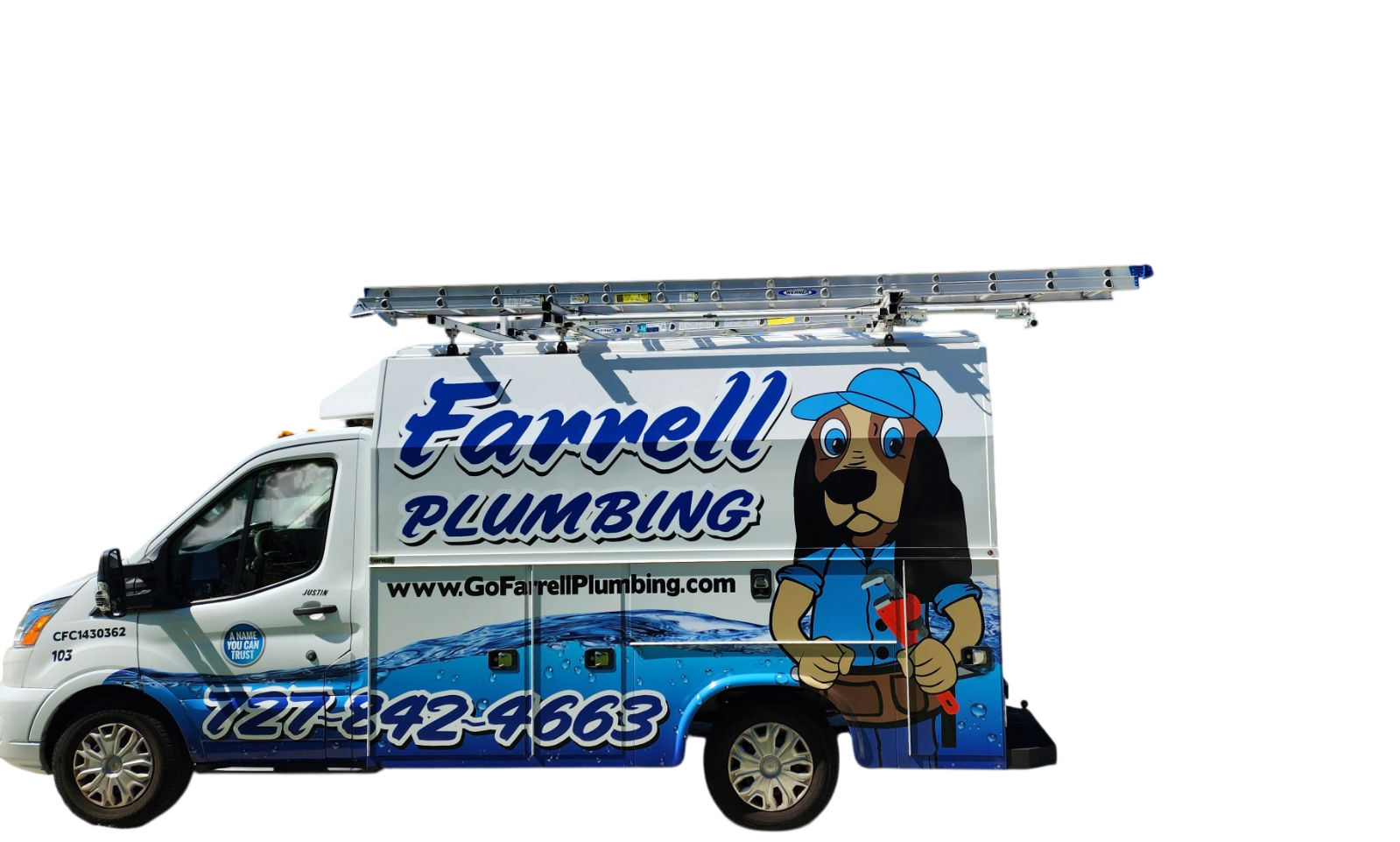
Every water heater installation, repipe, and sewer replacement Farrell Plumbing performs in Pasco and Hernando County is permitted and inspected, and the permit number appears on your invoice so the paperwork is in your hands when you need it. If you have inherited work you suspect was never permitted, we can pull the permit history on your address and tell you plainly whether you have a problem worth correcting or a record that is already clean. Farrell Plumbing holds Florida license CFC1430362.
Talk With Our Team
Got a question this article didn't answer?
Reach our team at our Port Richey, Spring Hill, or Palm Harbor office.